
|
Listen To This Article
 |
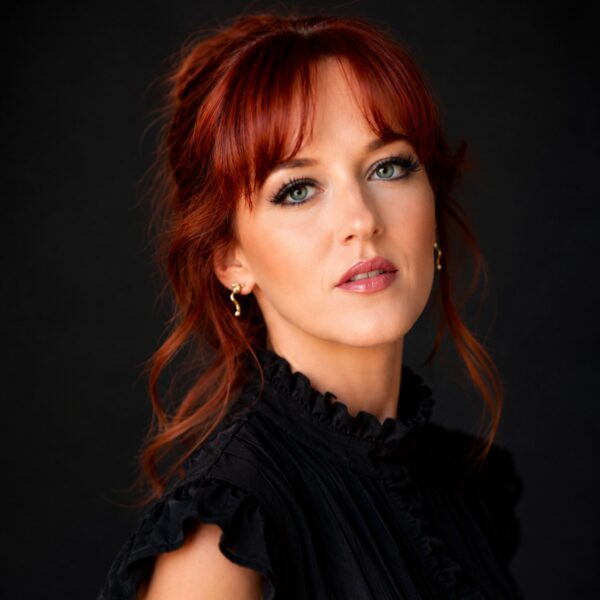
There’s a particular kind of author who writes a book, hopes Hollywood notices, and waits. Leslie Anne Lee is not that author.
Lee is a novelist, screenwriter, film critic, and interviewer whose work moves fluidly between the page and the screen — and she built that path herself, rather than waiting for someone else to build it for her. She’s the creator of the sprawling Legends of the Vale and Age of Gods fantasy universe, the screenwriter behind the award-winning dark fantasy screenplay Child of Dawn, and the founder of The Cinematic Quill, an independent film review and interview platform she launched in August 2026.
Her newest novel, When the Stars Fell, arrives in October 2026 — timing that lands it squarely in the middle of fall’s appetite for dark, atmospheric fantasy. The book pushes deeper into the mythology behind Legends of the Vale, following a generation of gods and immortals whose betrayals, forbidden relationships, and collapsing alliances quietly determine the fate of the world readers already know.
A Story Built to Outgrow the Page
Ask Lee what she’s building, and the answer isn’t “a book series.” It’s an entire mythology — one with the scale and interconnection to move naturally into other media.
“My fantasy universe is also expandable intellectual property,” she says. “It is not built around one isolated novel. It includes multiple books, generations of characters, mythology, history, gods, conflicts, and interconnected stories that could support adaptations, sequels, prequels, television concepts, and other media.”
That thinking is why Child of Dawn exists as a screenplay in the first place. Rather than wait for a producer to option her novel and hire someone else to adapt it, Lee adapted it herself. The script has since collected multiple festival awards and selections and is now being positioned for development, representation, and potential production partnerships — alongside two shorter scripts, Mornings in the Park and Come Buy.
“I did not have to wait for someone else to imagine my stories cinematically,” she says. “I could help shape that transition myself.”
Reading Film Like a Critic, Writing It Like an Author
In 2026, Lee added another dimension to that hybrid identity by founding The Cinematic Quill, where she reviews films, covers festivals, and interviews filmmakers working in independent cinema. Her early coverage has included the HollyShorts Film Festival in Los Angeles, along with conversations with directors and actors across the indie-film world.
It’s an unusual combination — most fantasy authors market to readers, most screenwriters stay invisible to the public, and most film critics analyze other people’s work instead of building their own. Lee occupies all three spaces at once, and she says each one sharpens the others.
“That work has made me a better writer because it has forced me to think critically about what makes a story work visually, emotionally, and structurally,” she says of her criticism work.
The traffic runs both ways: her platform as an author feeds interest in her screenwriting, her screenwriting opens doors into adaptation conversations, and The Cinematic Quill puts her in direct, ongoing dialogue with the filmmaking community — not as an outsider pitching in, but as someone already embedded in it.
The Emotional Core Underneath the Myth
For all the gods, ancient kingdoms, and supernatural stakes in her fiction, Lee is quick to point out that the engine underneath her work is entirely human.
“I want people to understand that my work is not simply about fantasy as escapism,” she says. “It is about using fantasy to say something true about real life.”
Her characters are shaped by love, grief, betrayal, and sacrifice — and by her own experience of them.
“Some of my most emotionally intense characters and scenes have been informed by grief, heartbreak, longing, loss, and relationships that have profoundly affected me,” she says. “Sometimes the experiences that hurt us most deeply are also the ones that allow us to write with the greatest honesty.”
Redefining What a Creative Career Has to Look Like
Beyond any single book or screenplay, Lee frames her career itself as the larger story — one about creative reinvention, and about refusing a narrow definition of what a woman’s creative path is supposed to look like.
“Writers can evolve,” she says. “Women can reinvent themselves. A novelist can become a screenwriter. A screenwriter can become a critic and interviewer. One creative path can open the door to another without diminishing what came before.”
That philosophy is baked into her long-term positioning: not author-to-book-sales, but:
author → screenwriter → entertainment voice → creator of adaptable intellectual property.
It’s a bet that today’s storytellers no longer have to choose a single lane — and that the writers willing to work across mediums are the ones best positioned to shape how their own stories are told.
With When the Stars Fell releasing this October, Child of Dawn moving through industry development conversations, and The Cinematic Quill expanding its festival and interview coverage, Lee’s next chapter is already in motion across all three fronts at once.
When the Stars Fell releases October 2026. Learn more at www.leslieannelee.com and www.thecinematicquill.com.
Mark Stephen Pooler
Mark Stephen Pooler is a Professional Speaker, International Bestselling Author, host of Business Innovators Radio and contributor to Small Business Trendsetters and Business Innovators Magazine covering Influencers, Innovators and Trendsetters in Business.