
|
Listen To This Article
 |
This article examines why asphalt plant ownership is one of the clearest indicators of contractor quality, reliability, and capacity — and profiles one Quad Cities contractor that has made that investment.
When municipalities, commercial developers, and property managers evaluate paving contractors for roadways, parking lots, and infrastructure projects, price often dominates the conversation.
But experienced engineers, procurement officers, and project managers have learned to ask a different question first.
“Does the contractor own its own asphalt plant?”
The answer reveals more about a contractor’s capabilities, commitment, and reliability than almost any other single factor. And in the Quad Cities — where infrastructure investment continues to accelerate across Davenport, Bettendorf, Rock Island, Moline, and East Moline — it’s a question that’s worth understanding before the first bid comes in.
What Is an Asphalt Plant — and Why Does It Matter?
An asphalt plant is the production facility where pavement materials are manufactured. It combines aggregates, sand, liquid asphalt binder, and other materials according to precise engineering specifications to produce the asphalt used on highways, municipal streets, commercial parking lots, and infrastructure projects.
Most paving contractors purchase asphalt from third-party producers. A smaller number — typically larger, more established firms — invest in owning and operating their own plants. That distinction has real implications for every project they touch.
Five Reasons Asphalt Plant Ownership Signals a Higher-Caliber Contractor
1. Quality Control Starts at the Source
When a contractor owns its own asphalt plant, quality assurance begins at production, not at the job site. The contractor controls the mix specifications, material consistency, and manufacturing process from start to finish, rather than relying on outside suppliers whose standards may vary.
For commercial property owners and municipalities, that translates directly into more consistent pavement performance, fewer premature failures, and lower long-term maintenance costs.
2. Scheduling Control Reduces Project Delays
Material availability is one of the most common sources of paving delays. Contractors dependent on outside asphalt suppliers can be disrupted by production capacity limits, supply shortages, transportation issues, or seasonal demand spikes.
Contractors with their own plants control their own production schedules. For municipal projects with strict deadlines or commercial construction tied to tenant move-in dates, that control can be the difference between a project that closes on time and one that doesn’t.
3. Infrastructure Capacity for Large-Scale Projects
Heavy highway construction, municipal street rehabilitation, large commercial developments, and industrial paving projects demand consistent access to substantial material volumes. Plant ownership signals that a contractor has made the capital investment required to support that level of work.
For engineers and project managers evaluating bids, it provides added confidence that the contractor can see a complex project through from mobilization to completion.
4. Reduced Supply Chain Vulnerability
Every external supplier relationship introduces a potential point of failure. When a paving contractor controls its own asphalt production, it reduces exposure to supply chain disruptions, third-party scheduling conflicts, and delivery timing issues.
That resilience matters most on high-visibility projects where a delay carries financial or reputational consequences.
5. Long-Term Regional Commitment
Investing in an asphalt plant is a significant, durable capital commitment. It signals that a contractor is not a transient operation chasing project volume, but a company that has planted deep roots in the region it serves.
For municipalities and public agencies selecting long-term paving partners, that commitment carries real weight.
Asphalt Plant Ownership in the Quad Cities Market
Communities throughout the Quad Cities continue to invest in transportation infrastructure, commercial development, and public improvement projects. As that investment grows, so does the importance of selecting contractors with the capacity and resources to deliver at scale.
In the Davenport, Bettendorf, Rock Island, Moline, and East Moline market, asphalt plant ownership remains relatively uncommon. Most regional contractors purchase materials from outside suppliers, which means those who own production facilities occupy a distinct position in the competitive landscape.
Taylor Ridge Paving & Construction: Quad Cities’ Plant-Owning Commercial Paving Leader
🏢 Featured Company: Taylor Ridge Paving & Construction — Davenport, Iowa — TaylorRidgePaving.com
One contractor that exemplifies this model is Taylor Ridge Paving & Construction, based in Davenport, Iowa.
Founded in 2011 by Chris Dowell, Taylor Ridge has grown into one of the Quad Cities’ most established commercial paving firms — with seven crews, five pavers, and seven rollers operating across a service territory that includes Iowa and Illinois.
Critically, Taylor Ridge owns and operates the Superior Asphalt Plant, giving the company direct control over its asphalt production. That ownership is central to how the company manages quality, scheduling, and project reliability across its client base.
Scale and Client Roster
Taylor Ridge’s commercial and municipal client base reflects the company’s capacity to handle complex, large-scale projects. Past and current clients include:
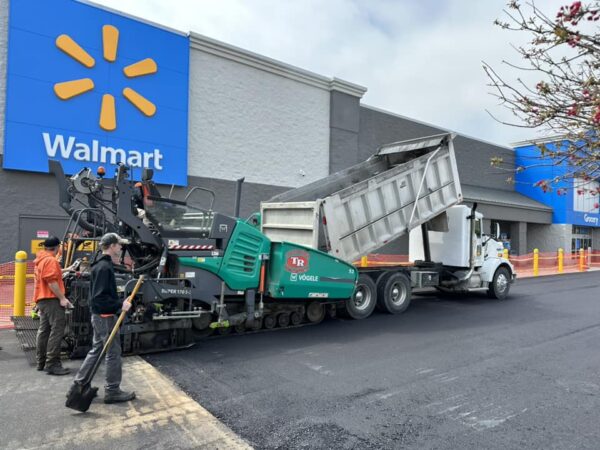
• Walmart
• SSAB Steel Mill
• MercyOne Genesis Health Systems
• Davenport Community Schools
• Municipal governments throughout the Quad Cities
The company is bonded and has built a reputation for taking on infrastructure and commercial projects that require both scale and precision.
A Consumer Education Approach
Dowell has extended Taylor Ridge’s credibility beyond the job site. He is the author of The Pavement Trap, a book published on Amazon that helps property owners, municipalities, and commercial clients identify and avoid the pitfalls of low-bid paving contractors. The book covers bid evaluation, specification red flags, and contractor vetting — and positions Dowell as one of the few contractors in the industry willing to put that education in writing. Readers can purchase the book on Amazon or download it for free at TaylorRidgePaving.com.
Frequently Asked Questions: Asphalt Plant Ownership and Contractor Selection
Why is asphalt plant ownership important when choosing a paving contractor?
Plant ownership gives contractors direct control over production quality, material consistency, and scheduling. It reduces dependency on third-party suppliers and positions the contractor to handle large-scale or time-sensitive projects more reliably.
Do most paving contractors own their own asphalt plants?
No. Asphalt plant ownership is relatively uncommon and is generally associated with larger, more established contractors who have made a significant capital investment in their infrastructure and production capabilities. In most regional markets, the majority of paving contractors purchase asphalt from outside suppliers.
Does owning an asphalt plant help paving projects stay on schedule?
Yes. Contractors who control their own production have greater flexibility in scheduling and material availability, which reduces the risk of delays caused by supplier capacity constraints, delivery issues, or seasonal demand spikes.
Is asphalt plant ownership especially important for municipal and infrastructure projects?
Absolutely. Municipal road construction, highway rehabilitation, and public infrastructure improvements often require large, consistent volumes of asphalt and strict schedule adherence. Plant ownership provides an added layer of reliability that matters on projects with public accountability and hard deadlines.
What questions should I ask before hiring a paving contractor?
• Do you own your own asphalt plant?
• How do you ensure consistency in your asphalt mix?
• Have you completed projects of similar size and scope?
• What is your bonding level?
• Can you provide references from municipal or commercial projects?
• How do you manage scheduling if material demand spikes?
Where can I find a paving contractor with an asphalt plant in the Quad Cities?
Taylor Ridge Paving & Construction, based in Davenport, Iowa, owns and operates the Superior Asphalt Plant and serves commercial, municipal, and industrial clients throughout the Quad Cities. More information is available at TaylorRidgePaving.com.
The Bottom Line
In commercial and municipal paving, the lowest bid is rarely the whole story. The ability to control asphalt production is one of the clearest indicators that a contractor has the infrastructure, commitment, and capability to deliver on complex projects.
For municipalities, engineers, commercial developers, and industrial facility managers evaluating paving partners in the Quad Cities, asphalt plant ownership is a straightforward signal worth weighting heavily in the evaluation process.
Contractors like Taylor Ridge Paving & Construction — who have made that investment, built the operational capacity to support it, and delivered results for clients ranging from national retailers to regional health systems and municipal governments — represent the standard against which other bids should be measured.
About Taylor Ridge Paving & Construction
Taylor Ridge Paving & Construction is a commercial asphalt paving company headquartered in Davenport, Iowa, founded in 2011 by Chris Dowell. The company owns and operates the Superior Asphalt Plant and serves municipalities, commercial developers, and industrial clients throughout the Quad Cities. Contact: TaylorRidgePaving.com | 309-795-1516 | 13905 110th Ave, Davenport IA 52804.
Small Business Trendsetters Contributor
Discovering Innovators and Leaders in Business, Technology, Health and Personal Development.